
- 12 August 2026
If you're suffering from unending breakouts, one of the first thoughts that comes to mind is "How long will it take for treatments to treat acne?" At DermoRita Skin Clinic, a trusted dermatology clinic in Delhi, patients are often seeking expert advice to understand realistic timeframes for treatment and the most effective solutions available, such as laser treatments for acne or more advanced acne treatments in Delhi. Although everyone is looking for quick results, treating acne demands patience, consistency, and a specialised method to achieve clean and healthy-looking skin.
Why Acne Doesn't Disappear Overnight
Acne can be caused by multiple factors, such as excessive oil production, blocked pores, infection, and hormonal fluctuations. Because acne develops under the skin prior to becoming obvious, treatment focuses on preventing new breakouts and healing existing blemishes.
The majority of acne treatments work with the natural renewal process of the skin, which typically lasts around 28 days. Improvements are therefore generally gradual rather than immediate.
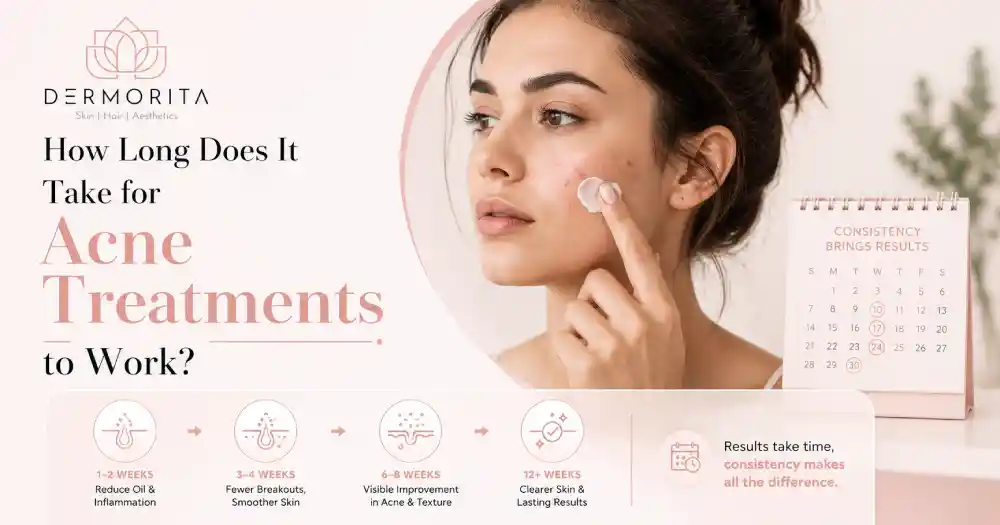
Typical Timeline for Acne Treatments
The exact length of time to see noticeable improvements depends on the degree of acne, skin type, treatment method used, and how well the treatment plan is implemented.
First 2–4 Weeks
In the first few weeks, you could see little improvement or notice a slight increase in breakouts. This stage, commonly referred to as "purging," occurs because blocked pores are being cleared from the skin. While it can be discouraging, it is a normal reaction for some prescription medicines and professional treatments.
After 6–8 Weeks
The majority of patients notice positive results after six to eight weeks. In this phase, active pimples become less frequent, inflammation and redness start to decrease, oil production becomes more balanced, and existing blemishes begin healing. Regular use of prescribed medicines or skincare treatments is vital during this time. Complementary treatments like skin resurfacing can help accelerate improvements in texture during this phase.
After 3–6 Months
The most significant improvement is usually visible between three and six months. Patients typically experience fewer new breakouts, smoother and more supple skin, reduction in inflammation, and better overall skin appearance. For severe to moderate acne, regular maintenance treatments may be required to prevent recurrence.
Factors That Affect Treatment Results
A variety of factors affect how quickly acne reacts to treatment.
Severity of Acne — Mild acne generally responds more quickly than severe cystic or inflammatory acne. Large cysts and nodules require longer treatment as inflammation spreads deeper into the pores.
Hormonal Imbalances — Hormonal acne usually requires further evaluation and treatment. If hormones are causing excessive oil production, treatments could take longer until root causes are addressed.
Skin Type — People with oily skin may require more time to control sebum production. Patients with open pores alongside acne may also need additional targeted interventions to fully stabilise the skin.
Treatment Consistency — Refraining from taking medications or frequently changing products can cause delays in progress. Following the dermatologist's advice consistently gives you the best chance of treatment success.
Different Acne Treatments and Their Timelines
Different treatment options operate at different rates.
Topical Medications
Prescription creams containing retinoids, benzoyl peroxide, or antibiotics typically take 6–12 weeks before any improvement is noticeable. These drugs work by unblocking pores, decreasing bacteria, and reducing inflammation.
Oral Medications
Oral antibiotics can reduce inflammation in 4–8 weeks, whereas hormonal treatments could take several months before improvements become evident. For those with severe acne, isotretinoin can provide significant improvement over a course lasting 4–6 months under medical supervision.
Chemical Peels
Chemical peels remove dead skin cells, decrease the appearance of pores, and reduce post-acne pigmentation. Many patients see smoother skin following just a few treatments; however, optimal results require multiple sessions. A carbon peel is another popular option that targets acne-causing bacteria while refining skin texture simultaneously.
Laser Treatment for Acne
Modern laser therapy for acne is a cutting-edge solution to reduce active acne, inflammation, and acne scars. Based on the type of laser and the degree of acne, improvement usually occurs after two or three treatments. Most patients require several sessions spread a few weeks apart to achieve the greatest results.Laser toning can also boost collagen production, improving the overall appearance of skin over time.
Why Personalised Acne Treatment Matters
No two cases of acne are the same. Treating acne solely based on internet advice or social media trends can slow recovery or make the condition worse.
At DermoRita Skin Clinic, each patient receives an in-depth skin examination prior to starting acne treatment in Delhi. The treatment plan is customised in accordance with acne intensity, skin type, medical background, lifestyle factors, hormonal influences, and previous treatments.
This individualised approach helps increase treatment efficacy while minimising side effects.
Tips to Get Faster Results
Although acne cannot be cured overnight, certain lifestyle choices can help improve treatment results.
Follow Your Treatment Plan — Follow the prescribed dosage and do not stop treatment prematurely because improvement appears slow.
Avoid Picking Pimples — Squeezing or picking at acne lesions can cause inflammation, slow healing, and increase the chance of permanent scarring.
Use Gentle Skincare — Choose dermatologist-recommended cleansers and moisturisers that are non-comedogenic and suitable for acne-prone skin.
Guard Your Skin from the Sun — Sun exposure can worsen post-acne pigmentation. Regular sunscreen protects healing skin and prevents dark patches from becoming more obvious. Patients experiencing significant pigmentation after acne may benefit from dedicated pigmentation treatment alongside their acne management plan.
Maintain a Healthy Lifestyle — A healthy diet, adequate hydration, sufficient sleep, and stress reduction all contribute to healthier skin and improved treatment results.
When Should You Revisit Your Dermatologist?
If you've been following your treatment plan consistently for up to three months with no significant improvement, it is crucial to revisit your dermatologist. Treatment adjustments can consist of changes in medication, adding professional procedures, analysing hormonal triggers, considering laser treatment for acne, or addressing acne scars or pigmentation that has developed.
Regular follow-up appointments enable your dermatologist to track progress and optimise your treatment programme.
Why Choose DermoRita Skin Clinic?
Choosing an experienced dermatology clinic in Delhi can significantly impact your acne journey. At DermoRita Skin Clinic, patients receive evidence-based treatment using the most advanced diagnostic methods and cutting-edge procedures.
With the expertise of Dr. Sarita Sanke, treatment programmes are specifically customised to meet each individual's skin concerns. Whether you require medical management, chemical peels, laser treatments for acne, or long-term solutions for acne scar reduction, the clinic focuses on the safest, most effective, and most personalised treatment plans created to deliver long-lasting results. View real patient results to understand the quality of outcomes achieved.
Conclusion
If you're wondering how long acne treatments take to work, the answer depends on the extent of the acne, the treatment chosen, and your commitment to following the plan. While some improvement may be noticed within 6–8 weeks, more substantial results generally take between three and six months.
Looking for professional acne treatment in Delhi? Visit DermoRita Skin Clinic, a reputable dermatology clinic in Delhi that treats acne by focusing on root causes rather than merely temporary fixes. With individualised care, the most advanced treatments, and alternatives like laser treatments for acne, you can achieve clearer, healthier skin with a reduced likelihood of future breakouts and acne-related scarring.Book your appointment today to get started.
Clinic Timings
Consultation timings 11:00 - 8:00 PM ( Monday to Saturday) Sunday- 12:00 - 5:00 PM Wednesday closed (By prior appointment only) Video Consultation Monday to Saturday Available
Email: sankesarita@gmail.com